
Welcome to the beginning of the Five “S”s!
Why Sort?
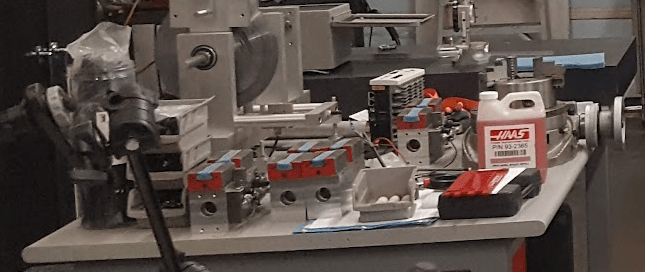
In any productive workspace there are four types of things – the things used to create your product (inventory), the things needed to convert the inventory into product (tools), the furnishings and tables and shelves to hold the first and second types of things, and everything else. It is the last category, “everything else”, that we are here to discuss.
In many cases there are furnishings (cabinets, bins, boxes) that are present just to store the “Everything Else”. This doubles the amount of stuff that doesn’t belong in the space. To be productive and safe, the space needs to have the necessary equipment and just enough inventory to accomplish the task. One thing extra is too much. Things that are in the workspace that are not needed create hazards (trip, lack of space, flammable materials, old drawings and documents) and consume valuable real estate.
The first step in applying the 5S’s is to understand what is needed in the space and what is not. For a first dash approach to any space that has never been 5S’d the most common tool are red tags. These can be stickers, post-it notes, tags with string. The intent is to have the team that regularly works in the space identify those things that are not needed (red tag), and these things will be removed from the space.
Sounds simple.
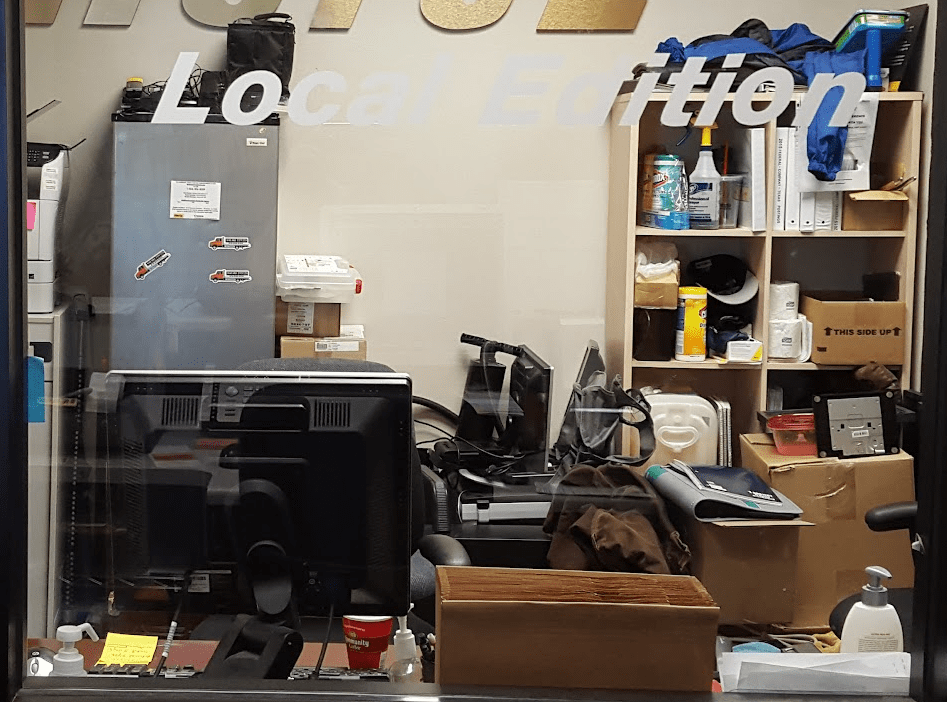
I bet you know someone (maybe multiple someones) who are unable to throw things away. I don’t necessarily mean a hoarder, but yes – hoarding. People have trouble letting go. For this reason you might find that your folks are reluctant to stick a red tag on anything for fear that someday they might need it. I have worked with technicians and engineers and shop managers who all have the same affliction. They see a value in retaining “stuff” over the benefits of a clean on simple workspace. One of the nicest, smartest, most creative of technicians had a talent for filling cubicles with “Stuff”. He would get a cubicle and work in it, accumulating boxes of materials and one or more (space depending) cabinets to store various “stuff” until he could no longer fit both himself and his “stuff” in the same cube. He would then move along, not unlike a hermit crab, to an available cube. He would continue to fill the previous cube until it reached capacity, or he needed his “stuff” closer. When I joined that company he had left behind three full cubicles and was accumulating in a fourth.
I would like to say he was an outlier, but in the engineering world he is not. Engineers (in particular) feel they are helping by holding on to the “extra” parts from design or development or the last thing they tested, in case they need it… someday. An electrical engineer with bins and boxes filled with wire of all lengths and gages. A mechanical engineer with valves and cylinders and bins of screws and bolts. An engineer who became Vice President over time and left behind a legacy of notebooks, binders, and file cabinets filled with every spec sheet, drawing revision, copy of a random email – enough to fill in excess of ten bookshelves and ten filing cabinets. That particular example I have seen in four different companies – more that 40 years worth of trash in binders.
I digress. The point here is folks don’t like the red tags. Sometimes they don’t want to get rid of things. So give them yellow tags as well.
Red tags are for things they truly do not need, green tags are for those things they use every day (or almost everyday). Yellow tags are for the things they feel they need to hold on to, but are not daily use items, but they do not want to get rid of. This helps with the anxiety and stress of getting rid of things. Of course, you will be removing the yellow tagged materials as well. (Let’s hope they aren’t reading this.)
Second Option – Fresh start (big flush)
Sometimes the better option is to push the reset button, get rid of everything in the space. Create a naked, clean space with not one single thing in it. Dust and clean the floor. Now, tell the folks to go to work – the pile of “stuff” is located over there (wherever you put it). Go get the things you need and bring them into the space. After two or three days of this (admittedly rather extreme) measure you should have a great first pass at the Sort required.
Check your furnishings
Take a hard look at the benches and furnishings in the room. A simple rule I apply is regarding doors. If you have a bench or a wall cabinet with doors, either replace it with something that has no doors or remove the doors. Doors hide things, and in a functioning workspace nothing can be hidden. This is not a space to accumulate things, this is a space where raw material enters, finished goods leave, then we take out the trash. Nothing stays except furnishings and tools, period.
So look around – do you have the right furniture in the space? Are there opportunities for improvement?
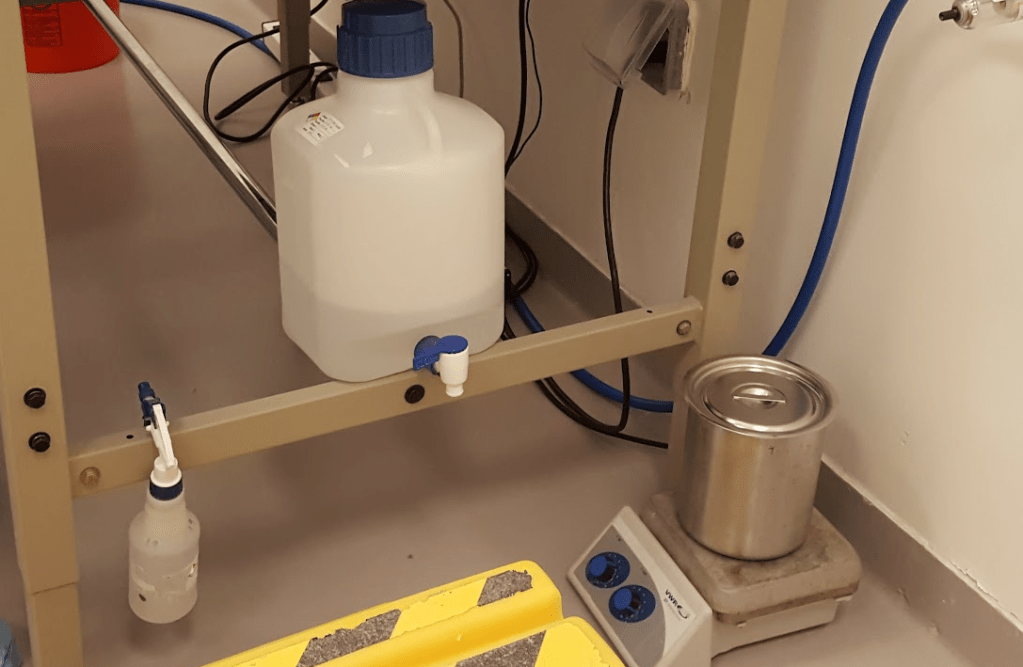
This example here is a location for an operator to sit on the yellow plastic steps and maintain a pot full of water held at a specific temperature. Why is the heater on the floor? Why is the operator sitting for hours in this position? Who thought it was a good idea to balance 3 gallons of water on a rail under a table next to a power strip? The answers to all of these questions came down to one thing – doing whatever it took to make production. It did not take into consideration safety (there are 5 safety issues in this picture), ergonomics, or work flow. So look at your area. Is it safe? Are there power strips everywhere? Is it well lit? Is there fire protection, first aid, and an exit sign?
Inventory
Once you are satisfied that all the extra “Stuff” has been removed and the tools that are needed are present and the furniture is correct, look at your inventory. The dedicated work space is a place where Just In Time inventory can be applied (and used as a learning tool). Look at your production flow. What is the pace of outbound product? If everyone was working at an optimal pace (not flat out racing – optimal) what is the production rate? Now consider the pace of inbound material, making the assumption that there should be nothing in the space that isn’t part of active work. That is how you want material to flow – same pace in as out. There are companies and industries that firmly believe that the pace is managed by shift – everything the shift needs (plus some “just in case” the “just in time” fails) goes into the space, then at the end of the shift everything comes out. This is referred to as Batch or Lot inventory control and is not considered effective material management
Do you have a wall dedicated to “open stock”? That wall represents two crimes against ideal production. First, it consumes space unnecessarily. Second it removes control from inventory inviting the smallest, least expensive part in the process to become the tail wagging the dog.
Work out a cadence for material to be planned into production that matches the demand leaving production. That is the amount of acceptable inventory in your work space. No more than that.
The end result of the First S is to remove from the workspace anything that is not absolutely needed for production. No “what if”, no “just in case”, no “every once in a while”. This touches tools, materials, furnishings. What should remain after a successful Sort is these core elements. All the “other stuff” should be elsewhere. Or on Ebay. I have paid for an entire remodel by selling the unneeded equipment via a third party – so there may be an added benefit in your effort!
 sigmakatadojo.com